Hannah Wells Organization
Lost and FoundHannah Wells Organization is a nonprofit adoption agency whose confidential records become the decisive route through which Ransom reconstructs his birth identity. Presented first as Bethany’s workplace and vocation, it later emerges as the institution that handled his childhood adoption, preserved the names of his birth parents, and controlled access to the information he had spent years trying to obtain.
Nature and Public Mission
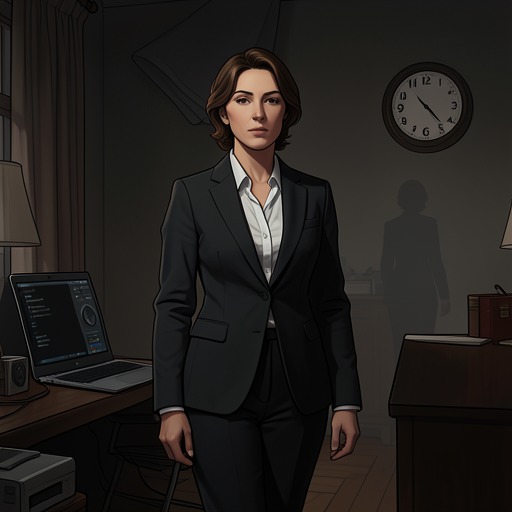
Hannah Wells Organization is described by Bethany as a nonprofit agency devoted to securing good placements for children who would otherwise face poor prospects in the system. She recognizes that its expensive-looking professional image and the money associated with adoption organizations can invite suspicion, yet insists that its staff work hard to find stable homes. Her explanation is partly a practiced professional defense: she knows she has probably offered similar assurances many times to people who doubt adoption agencies’ intentions.
Bethany’s connection to the organization is not merely occupational. She says she entered the field after knowing Sarah, a college acquaintance who had spent her life moving through the foster-care system. Sarah later reconnected with her birth parents, found that they were as harmful as before, and killed herself during the week before graduation. Bethany came to believe that a genuinely supportive family might have helped Sarah endure that history. The organization therefore represents, in Bethany’s account, an attempt to turn private grief into institutional care.
Records and Information Structure
The agency’s holdings include more than a simple list of adoptions. Ransom learns that the organization maintains a database of people who surrendered children for adoption and of the children placed through the system, along with information about donors, donations, and tax matters. The records are divided by category and access level: Bethany gives Ransom separate credentials for the adopted-children database and the database concerning parents who gave up children. She warns that each login is restricted to its designated records and that misuse could lock her out and force her to explain the breach.
The agency’s structure reflects the fragmented nature of adoption identity. Information about the child Ransom’s parents adopted is separated from their dossiers because the child was a minor at the time. The agency also holds records from the interview conducted with Ransom and his adoptive parents before he was sent home with them. These files preserve not only legal facts but institutional judgments, including an assessment that the two-year-old child showed above-average intelligence and minor behavioral issues consistent with unstable attachment to his birth parents.
Ransom’s Access and Investigation
The organization becomes the object of Ransom’s confidential bargain with Bethany. Rather than accept the five thousand dollars Bethany initially considers offering him to pose as her boyfriend, he proposes an exchange: secure access to files in the agency for his performance as her devoted partner during the reunion weekend. He refuses to explain the full purpose of his search, while Bethany presses him to promise that he will not use her credentials in a way that can be traced to her, do anything extremely illegal, or hurt anyone.
The arrangement gives Ransom an opportunity that ordinary public searches cannot provide. His parents’ adoption occurred roughly twenty years earlier and was closed, so he cannot obtain the needed information through normal state records. A family-court clerk has told him that the relevant paperwork may have been destroyed after so much time and that the more useful material is likely to remain with the agency. He knows his parents adopted a child but does not know the child’s name, the original surname, or the identities of the birth parents. Hannah Wells Organization is therefore not simply one possible source; it is the institutional archive through which the missing sequence of names can be recovered.
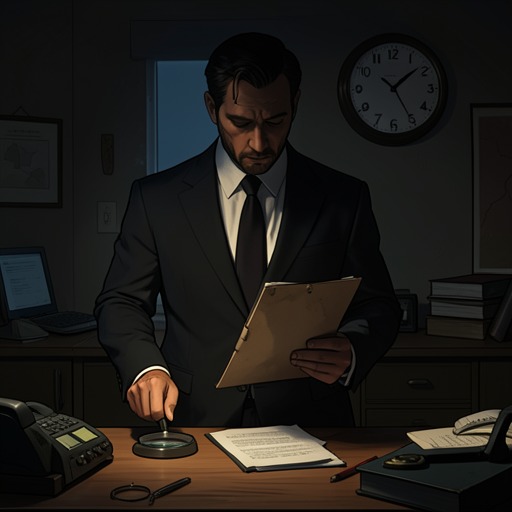
After Bethany writes down the two database addresses and gives him the password to her laptop, Ransom returns to the hotel room, opens Bethany’s computer, and logs into the page labeled “Children Served by Us.” He searches under the name he had stopped using years earlier, Patrick Nolan. The database first appears to return no result, then produces one. The file contains a photograph of a three-year-old child and identifies Janice and Raymond Nolan as the adoptive parents. Ransom recognizes them as his own parents and finds that he had been surrendered to the agency at age two.
The file supplies another crucial link. Ransom discovers that he was not originally Patrick Nolan but Patrick Cartwright. He then uses the second database, the records site for parents who gave up children, searching the Cartwright surname. Among roughly half a dozen entries, he finds Genevieve Cartwright and Alexander Cartwright attached to his birth name. The organization’s records thus reconnect a changed legal name, an adoptive household, and two previously unknown birth parents.
Consequences and Narrative Significance
For Ransom, the agency’s archive resolves a question that has shaped his life without answering every emotional or personal uncertainty surrounding it. The file does not list his birth parents directly, but the linked birth-parent database provides their names and information. He writes the details down and closes both databases, finally possessing the missing puzzle piece he has been seeking for years.
For Bethany, the organization is the source of both professional purpose and personal vulnerability. Her commitment to adoption grew from Sarah’s death and from the conviction that children need families who will care for them as individuals. Yet the same institutional system she serves also places sensitive histories behind passwords, divided databases, and rules governing authorized access. Her willingness to lend Ransom her laptop and credentials temporarily turns professional trust into an opening through which a stranger can enter the archive.
The Hannah Wells Organization therefore carries a double significance. It presents adoption as organized care, a practical response to children’s instability, and a repository of human lives; at the same time, it reveals how institutional classification can separate biological kinship from legal parenthood and leave an adopted person dependent on guarded records to learn his own name. Through its files, Patrick Nolan becomes Patrick Cartwright again, and the organization changes from the setting of Bethany’s career into the mechanism of Ransom’s identity search.